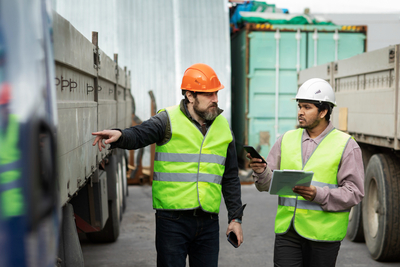
In global trade, the final step before goods leave the supplier often receives the least attention—and that’s where many problems begin. Products that pass inspection can still arrive damaged, incomplete, or incorrectly packed. For businesses sourcing from China, this gap between approved quality and safe shipment is where container loading supervision China becomes critical.
Experienced importers know that issues rarely happen in isolation. A shipment can be perfectly manufactured but poorly handled during loading. Cartons may be crushed, quantities miscounted, or mixed SKUs loaded incorrectly. These are not rare scenarios—they’re common, especially when timelines are tight and warehouse teams are under pressure to dispatch goods quickly.
From the outside, loading a container may look like a straightforward physical task. In reality, it’s a coordination-heavy process involving warehouse staff, logistics teams, and sometimes third-party inspectors.
A professional overseeing the loading process typically checks:
In container loading supervision China, the inspector’s role is not just to observe but to intervene when necessary. For example, if cartons are stacked too high without proper support, they can collapse during transit. If moisture is present inside the container, it can damage goods before they even reach the port.
These are practical risks—not theoretical ones—and they’re often overlooked when businesses rely solely on pre-shipment inspections.
Professionals with hands-on experience in China’s manufacturing hubs often encounter similar patterns of errors. One recurring issue is last-minute product substitution. A supplier may run short on approved stock and quietly replace it with a similar-looking batch. Without supervision during loading, this change can go unnoticed.
Another frequent problem is inaccurate carton labeling. In mixed shipments, even a small labeling error can create major confusion at the destination warehouse. One importer reported spending weeks sorting inventory because multiple SKUs were packed under identical labels.
Then there’s the issue of container space utilization. Poor loading practices can leave empty gaps, leading to product movement during transit. This increases the risk of damage, particularly for fragile or high-value goods.
These examples highlight why container loading supervision in China is not just an optional service—it’s a risk control measure grounded in real operational challenges.
Many businesses initially view loading supervision as an extension of quality control, but its benefits go beyond that.
In container loading supervision China, these benefits collectively help businesses maintain control over a process that would otherwise be out of sight.
Even experienced importers sometimes underestimate the importance of supervising the loading stage. A few common missteps include:
Relying only on factory assurances
Suppliers may confirm that everything is handled properly, but without verification, there’s always a risk of oversight or miscommunication.
Skipping supervision for repeat orders
Familiarity with a supplier often leads to reduced vigilance. However, even reliable factories can face staffing changes or operational pressure that affects consistency.
Ignoring container condition
A damaged or contaminated container can compromise the entire shipment, regardless of product quality.
Not aligning inspection and loading schedules
If the inspection is done too early, there’s a gap where changes can occur before loading. Timing matters more than many realize.
Avoiding these mistakes requires a more integrated approach to quality control—one that includes the final stage of shipment.
It’s important to approach this process with realistic expectations. Container loading supervision China reduces risk, but it does not eliminate it entirely.
For instance, inspectors can verify visible conditions and quantities, but they cannot control what happens once the container is sealed and transported. Similarly, while supervision helps prevent intentional or accidental errors, it cannot fully compensate for deeper supply chain issues such as inconsistent raw materials or poor production processes.
Transparency is key. Businesses should view this service as one layer of protection within a broader quality assurance strategy—not a standalone solution.
Companies with mature sourcing operations typically integrate loading supervision into their standard workflow. It’s not treated as an afterthought but as a checkpoint aligned with production timelines.
They often coordinate it alongside:
By doing so, they create a continuous chain of oversight from factory floor to shipment dispatch. In this context, container loading supervision China becomes the final safeguard rather than a reactive measure.
Professionals who have spent years working in Chinese warehouses understand that most issues are not due to negligence but to operational pressure. Workers are often managing tight deadlines, high volumes, and multiple shipments simultaneously.
In such environments, small errors are almost inevitable without structured oversight. A missing carton, a mislabeled box, or an improperly sealed container can easily slip through.
This is where on-site supervision adds value—not by policing workers, but by introducing structure and clarity at a critical moment.
For businesses aiming to strengthen their supply chain reliability, container loading supervision China plays a practical and often underestimated role. It bridges the gap between approved production and safe delivery, ensuring that goods are handled with the same level of care during dispatch as they are during manufacturing.
Organizations like Branding Manufacturing Services approach this process with a grounded understanding of real-world challenges. Their role is not to overpromise outcomes but to provide clear visibility, structured oversight, and accurate reporting at one of the most critical stages of international shipping.