
In industrial environments, fire risk is not an occasional concern it’s built into daily operations.
High-voltage equipment, combustible materials, heat-generating processes, and continuous production cycles create a setting where even a minor oversight can escalate quickly. Unlike commercial buildings, where fire risks are often predictable, industrial sites deal with dynamic hazards that shift throughout the day.
During system upgrades, Fire Watch Services Near Me help maintain safety without interrupting daily operations.
This is why fire watch services in industrial settings are not just a temporary solution they are a critical control mechanism designed to manage complex, evolving risks.
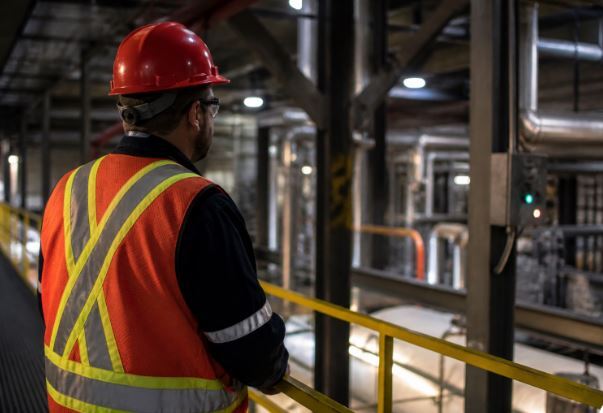
Fire watch is commonly defined as the use of trained personnel to monitor for fire hazards when systems are impaired or when risk levels are elevated. In industrial environments, that definition expands significantly.
Here, fire risk monitoring involves:
Unlike smaller properties, industrial facilities require a more strategic and scalable approach to fire watch services due to their size, complexity, and hazard intensity.
Industrial sites introduce challenges that standard fire watch protocols must adapt to.
Factories, refineries, and warehouses often span vast areas, making full visibility difficult.
Challenge: Ensuring no section is left unmonitored.
Flammable liquids, gases, and combustible dust are common in industrial operations.
Challenge: Identifying hazards before they interact with ignition sources.
Many industrial facilities operate 24/7, leaving no downtime for risk.
Challenge: Maintaining uninterrupted fire watch coverage without fatigue or gaps.
Heavy equipment and electrical systems generate heat and can fail unpredictably.
Challenge: Detecting early warning signs that automated systems may miss.
Noise, heat, and low visibility can make hazard detection more difficult.
Challenge: Maintaining situational awareness in demanding conditions.
Fire watch requirements in industrial environments are often triggered by specific conditions that increase vulnerability.
When fire protection systems are taken offline for maintenance, the risk profile changes immediately.
Fire watch ensures that:
Welding, cutting, and grinding are routine in industrial settings but they are also leading causes of fire incidents.
Fire watch personnel:
Unexpected failures in alarms or suppression systems create immediate compliance and safety concerns.
Emergency fire watch is deployed to:
Warehouses storing chemicals, fuels, or raw materials require constant oversight.
Fire watch helps prevent:
Fire watch personnel in industrial environments take on a more demanding role compared to other sectors.
Guards follow defined routes covering:
They are trained to identify:
In case of a threat, guards:
Fire watch guards often work closely with:
This ensures that changing conditions are addressed in real time.
Accurate logs are maintained for:
This documentation supports both internal safety management and regulatory compliance.
Industrial facilities are subject to strict fire safety compliance standards due to the potential scale of incidents.
Organizations such as OSHA, NFPA, and local fire marshals enforce regulations that often mandate fire watch under specific conditions.
Failure to meet these fire watch requirements can result in:
In high-risk environments, compliance is directly tied to operational continuity.
Consider a manufacturing facility undergoing maintenance on its fire suppression system.
During this period:
Without fire watch, a small equipment malfunction could go undetected.
With fire watch in place:
This layered approach prevents minor issues from escalating into major incidents.
Addressing the challenges of industrial fire watch requires tailored strategies.
Large facilities are divided into zones, with dedicated personnel assigned to each.
High-risk areas are monitored more frequently to reduce detection time.
Fire watch personnel coordinate with existing systems and safety teams for comprehensive coverage.
Guards are trained to handle industry-specific risks, such as chemical hazards or heavy machinery.
The number of guards and coverage intensity can be adjusted based on operational changes.
Selecting the right provider is critical in industrial environments where risks are higher and more complex.
Industry Experience
Providers should have experience in industrial settings, not just general security.
Technical Understanding
Knowledge of machinery, processes, and materials is essential.
Rapid Response Capability
Emergency fire watch situations require immediate deployment.
Compliance Expertise
Understanding OSHA, NFPA, and local regulations ensures proper implementation.
Flexibility and Scalability
The ability to adjust coverage based on site conditions is crucial.
In industrial environments, the consequences of inadequate fire watch extend beyond safety concerns.
Potential impacts include:
Fire watch services act as a preventive measure that protects both operations and assets.
Fire watch should not be viewed as a temporary fix. In industrial settings, it becomes part of a larger risk management strategy.
Organizations integrate fire watch into:
This proactive approach ensures that fire safety remains consistent, even as conditions change.
Industrial sites are complex systems where risks are constantly evolving. Automated fire protection systems are essential, but they cannot account for every variable.
Fire watch services provide the human oversight needed to manage this complexity.
They ensure that:
In environments where the margin for error is small, the presence of trained individuals actively managing fire risk is not just valuable it is essential.